The documented journey
Letters, receipts, editions and later donation papers show where the surviving leaves went.
A manuscript · a journey · a public dispute
One famous Bible manuscript. Three trips to Sinai. A loan to Russia. Then Constantine Simonides claimed that he had helped make it.
What do the records prove—and what is still a claim?
Begin the journeyBefore we begin
Our rule: a record of what someone said proves the statement was made. It does not prove the statement was true.
1843–1869 · the documented journey
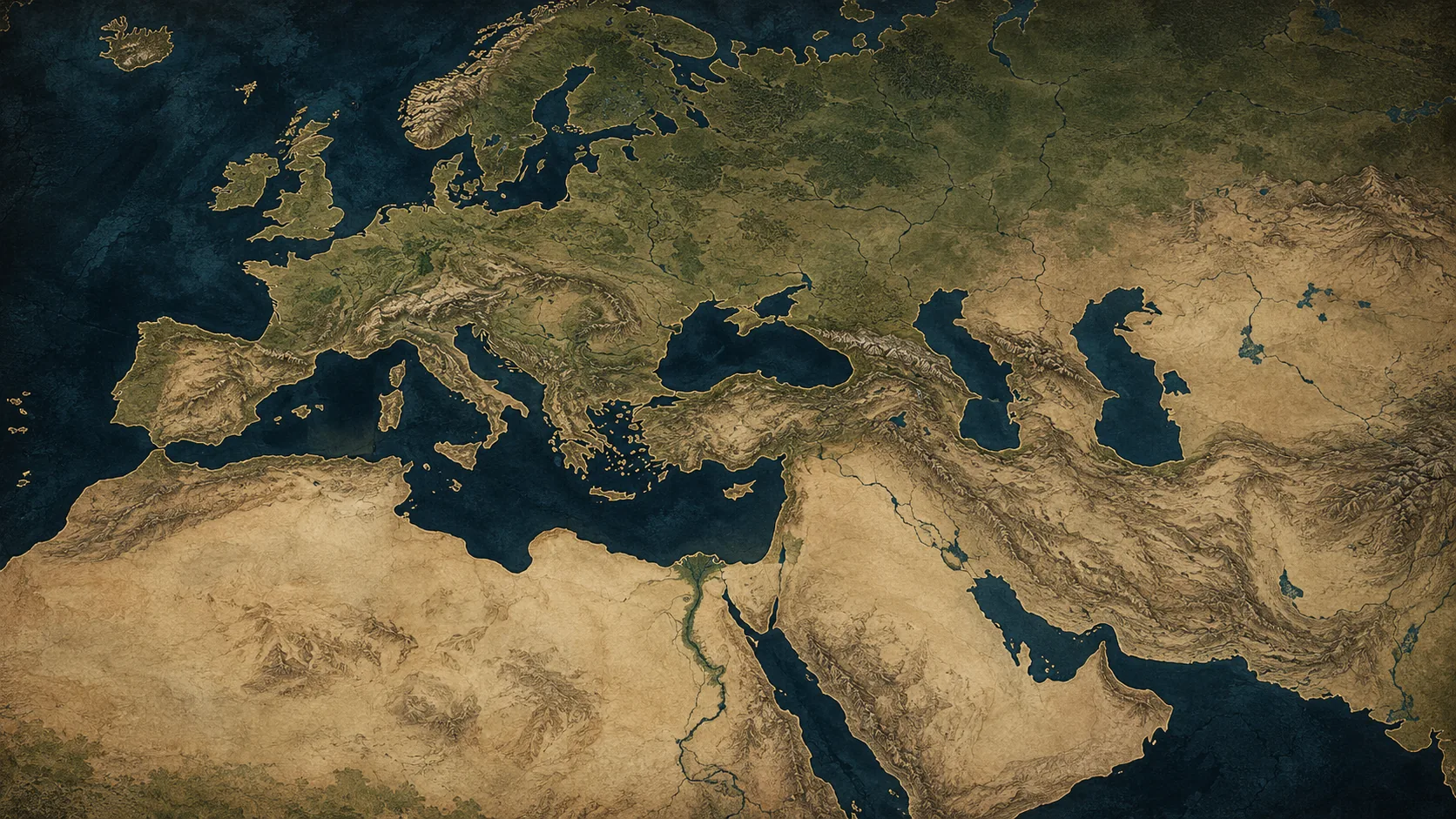
Three lines show three separate Sinai visits. They join named places in the recorded order; they do not claim that every ship, road or stop is known.
Illustrative atlas background; live routes show recorded place order, not exact roads or sea lanes.
Constantin Tischendorf left his university work in Leipzig to study handwritten Bibles across Europe. In Rome he was allowed limited time with Codex Vaticanus. Rome was part of his research journey, not a stop made with Codex Sinaiticus.
Backed by recordsAt St. Catherine’s Monastery, monks showed Tischendorf 129 leaves from an old Greek Bible. He left with 43 leaves. In 1846 he published them in Leipzig as Codex Friderico-Augustanus.
From a published accountTischendorf returned to the monastery. He obtained other manuscripts and one small Sinaiticus fragment, which he said had been used as a bookmark.
From a published accountOn his third visit, Tischendorf saw 347 leaves. They were moved to the monastery’s house in Cairo so he could study them. In September he signed a receipt describing the manuscript as a loan.
Backed by recordsThe 347 leaves went to St. Petersburg for checking and publication. Tischendorf promised they would be returned if the monastery asked, while Russian letters also discussed a hoped-for gift to the Tsar.
Backed by recordsTischendorf’s facsimile edition was presented to Tsar Alexander II. The manuscript then stayed with the Russian Ministry of Foreign Affairs.
Backed by recordsTen years after the loan receipt, church leaders in Cairo and at Sinai signed acts donating the manuscript to the Tsar. The long delay and the politics around the decision are still discussed.
Backed by recordsInternational project, 2005–2011
What it can show: The main chronology, present holdings, the 1859 receipt, the 1862 edition and the 1869 donation records.
Its limit: The project says the modern history is complex and that some intentions in 1859 remain disputed.
Open the sourceEnglish edition, 1866
What it can show: What Tischendorf publicly said about his visits and discovery.
Its limit: It is Tischendorf’s own later story and must be checked against receipts, letters and other witnesses.
Open the sourceRecords from 1859–1869
What it can show: Russian letters and the provisional agreement linking a loan, a hoped-for donation and church politics.
Its limit: The site presents the Russian archive’s reading of the agreement; the international project notes conflicting perspectives.
Open the sourcePut the discovery story to the test
One remarkable discovery can happen by chance. A series of convenient events deserves closer examination. Which events were unexpected, which involved advance information, and which depend on one person’s account?
Ask the harder question: Does the discovery story withstand examination? Suspicion is a reason to investigate, not a finding of fraud. We cannot calculate “lottery odds” without knowing the circumstances.
1843 → 1844
The record: In his later account, Tischendorf dates his meeting with Pope Gregory XVI to May 1843, his voyage from Livorno to Egypt to April 1844, and his Sinai visit to May 1844.
Why examine it: What did he learn in Rome? Did anyone identify a particular manuscript or monastery before he travelled?
The strongest caution: His account describes a wider search through libraries and monasteries. Visiting Rome to study manuscripts does not establish that Rome sent him to Sinai.
What would help decide it: Dated letters, recommendations or instructions written before the first Sinai visit. A direction from Rome has not been established in the sources presented here.
1845 → 1856 → 1859
The record: Uspensky described seeing the manuscript, including its New Testament, during his 1845 visit. His account appeared in 1856, before Tischendorf’s return in 1859.
Why examine it: Daniels and collaborators argue that this description and other contacts challenge a story of an entirely unexpected encounter in 1859.
The strongest caution: Information being available does not alone show that Tischendorf read it or knew where the leaves were. This later question cannot establish his knowledge before 1844.
What would help decide it: Compare the original Uspensky account with dated letters and records showing which reports reached Tischendorf before 1859.
The first 43 leaves
The record: Tischendorf later described finding leaves in a basket intended for burning. The manuscript project says no other record has been identified for his account of obtaining the first 43 leaves.
Why examine it: Daniels rejects the wastebasket story. Did a dramatic rescue story conceal what really happened?
The strongest caution: Lack of independent confirmation leaves a gap; it does not alone prove invention. The first leaves and the larger group need separate examination.
What would help decide it: Put his earliest private letters beside later published accounts and independent monastery records. Check where details agree, change or remain unsupported.
1859 → 1869
The record: The 1859 receipt promised return when requested. Formal donation papers followed in 1869, amid a disputed church succession and Russian diplomacy.
Why examine it: That gap raises concrete questions about consent, pressure and how the manuscript was removed and retained.
The strongest caution: The later donation papers must also be considered. An ownership or handling dispute does not establish when the manuscript was made.
What would help decide it: Read the receipt, diplomatic letters and donation papers together, including the monastery’s position rather than only one participant’s account.
Was the discovery story accurate? Was the manuscript handled honestly? When, and by whom, was it made? Evidence against one answer does not automatically settle the others.
Tischendorf’s account should face scrutiny even though it became widely accepted. Daniels’s case should face the same scrutiny. The colour, Simonides and Hermas arguments continue below.
Examine Daniels and Pinto’s case ↓Look carefully
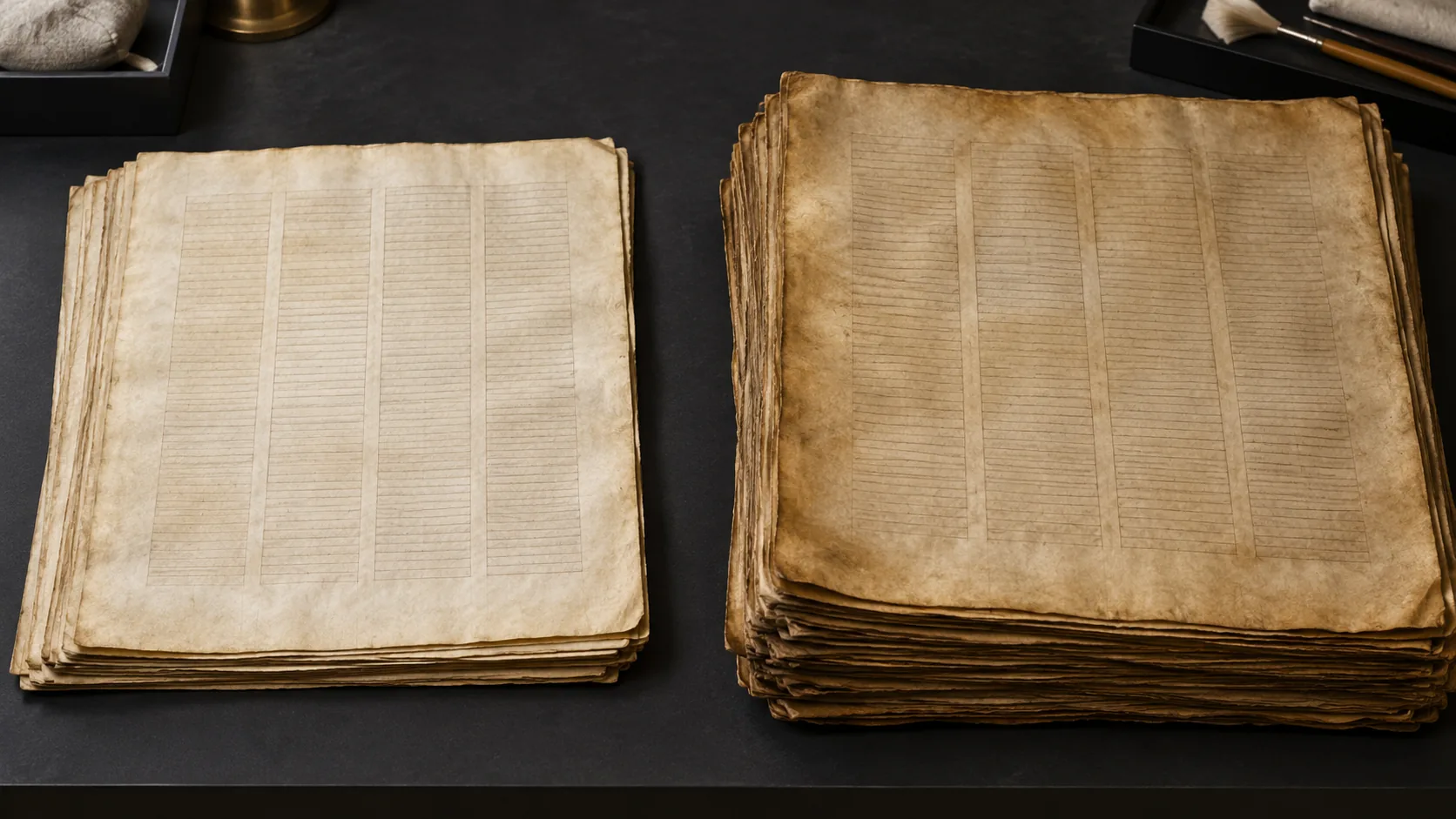
The 43 leaves taken in 1844 are in Leipzig. The main group of 347 leaves is in London. Online, the groups can look different in colour.
Colour-calibration warning
The project used shared standards, colour profiling and controlled lighting at four locations. It also chose a light-brown background as a compromise between readable ink and faithful parchment colour.
Camera settings, lighting, background, colour profile, web processing and your screen can all change what you see. A visible colour difference is worth investigating, but the online comparison alone cannot prove that someone darkened the manuscript.
Project technical record
What it can show: Four venues used common standards, colour profiling and fixed lighting; a light-brown background was chosen as a compromise.
Its limit: A carefully made digital image is still not the physical parchment, and a viewer’s screen adds another variable.
Open the source1862–1863 · the public dispute
In a letter printed by The Guardian in September 1862, Constantine Simonides claimed he had written the codex more than twenty years earlier.
Simonides said his uncle Benedict directed a new Bible manuscript at the monastery of St. Panteleemon on Mount Athos. He said it was meant as a gift for Tsar Nicholas I.
This is the place named in the historical claim: Mount Athos, not Mount Patmos.
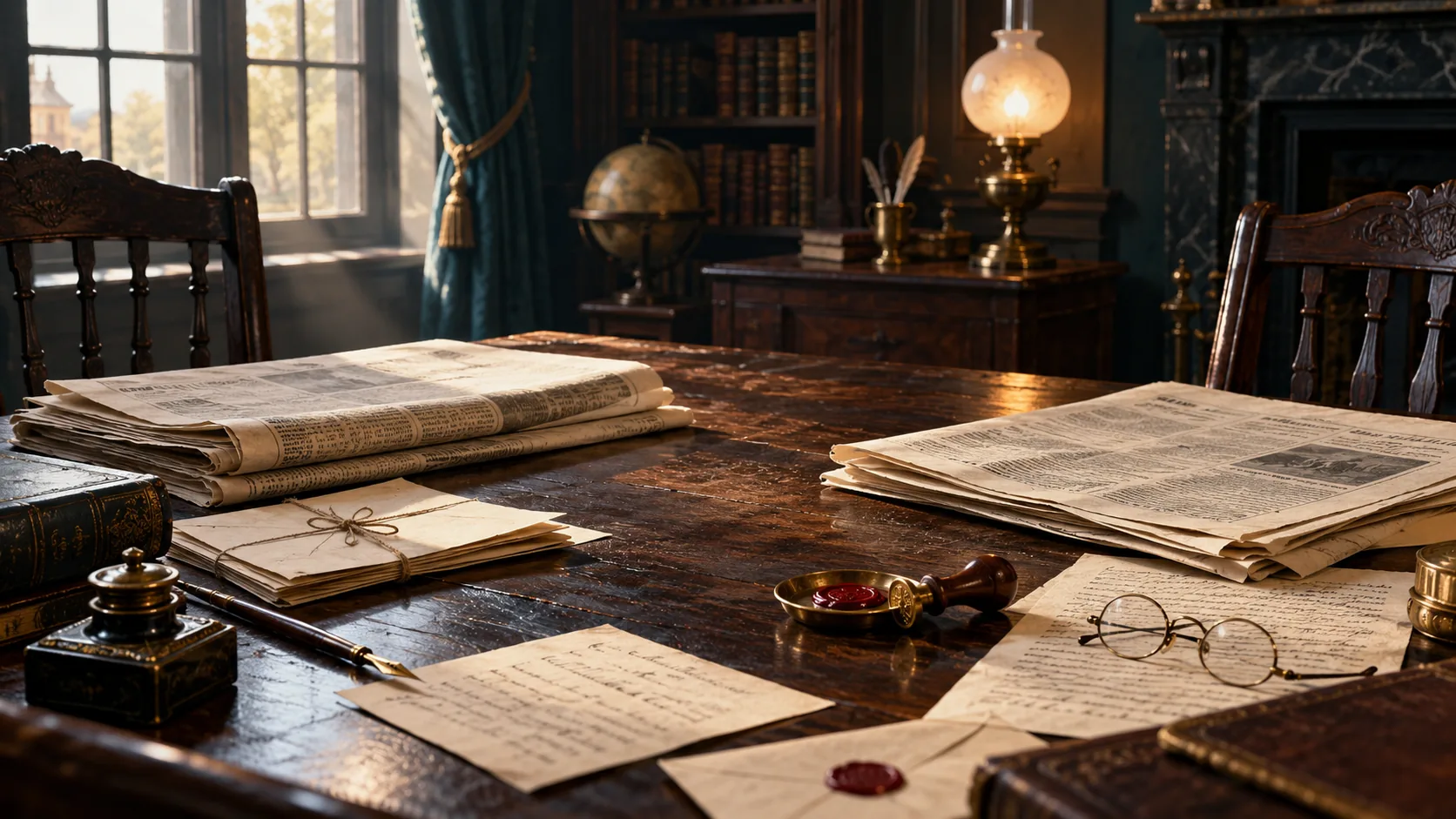
Samuel Tregelles dismissed the story. Simonides answered. Other writers challenged names, dates and handwriting. Henry Bradshaw said he had examined the codex and that Simonides’ description did not fit it.
The exchange continued into 1863. It was a real public debate, but a newspaper debate is not the same as a laboratory test.
The modern case for another look
These are their arguments, not settled facts. Each point is paired with a limit and a way it could be tested.
What he argues: Daniels and collaborators point to the lighter-looking 43 Leipzig leaves, the darker and more varied London leaves, the codex’s good condition, differences in ink images and the lack of published chemical age testing. They ask whether most leaves were made to look older after 1844.
What challenges it: The digitisation team used controlled lighting, colour profiles and a chosen background at four sites. A web image can shift colour. Palaeography, scribal work and the history of corrections also have to be explained.
What would test it: Calibrated physical measurements, non-destructive material analysis, open data and independent review would be stronger than screen comparisons.
What he argues: Pinto points to Tischendorf’s January 1859 letter saying he had heard stories told by Simonides before the larger group was shown to him. Pinto also connects Simonides’ real work with the Shepherd of Hermas and a disputed 1843 edition of the Epistle of Barnabas to unusual texts later found in Sinaiticus.
What challenges it: Critics dispute the dates and trustworthiness of some Simonides papers and editions. They also point to his record of disputed manuscripts and to the codex’s broader handwriting, correction and textual evidence.
What would test it: Locate and verify the early letters and editions, trace their custody, compare their readings openly and test the manuscript materials without damage.
Daniels and Pinto make a detailed case for Simonides. Here it remains a source-linked case to examine, not a verdict the reader must accept.
September/October 1862
What it can show: Simonides said he wrote the codex at St. Panteleemon on Mount Athos in 1839–40 and explained how he believed it reached Sinai.
Its limit: The letter proves that he made the claim. It does not prove that the claim was true.
Open the sourceModern research site
What it can show: The modern case that colour, ink, condition and the Simonides record deserve renewed scrutiny.
Its limit: The site argues for a conclusion. Its image comparisons must be weighed with the digitisation and colour-calibration cautions.
Open the source2019 paper
What it can show: Pinto’s detailed reply to objections, including his reading of Simonides and the Shepherd of Hermas dispute.
Its limit: It is advocacy for the modern Simonides case; each historical step still needs its underlying source.
Open the source2018 review
What it can show: A detailed challenge to the modern forgery case, including an argument that the Leipzig web images appear washed out.
Its limit: It is also a polemical review; its measurements and conclusions should be checked rather than merely accepted.
Open the sourceWhy Hermas matters
Codex Sinaiticus ends with early Christian writings outside the New Testament, including part of The Shepherd of Hermas.
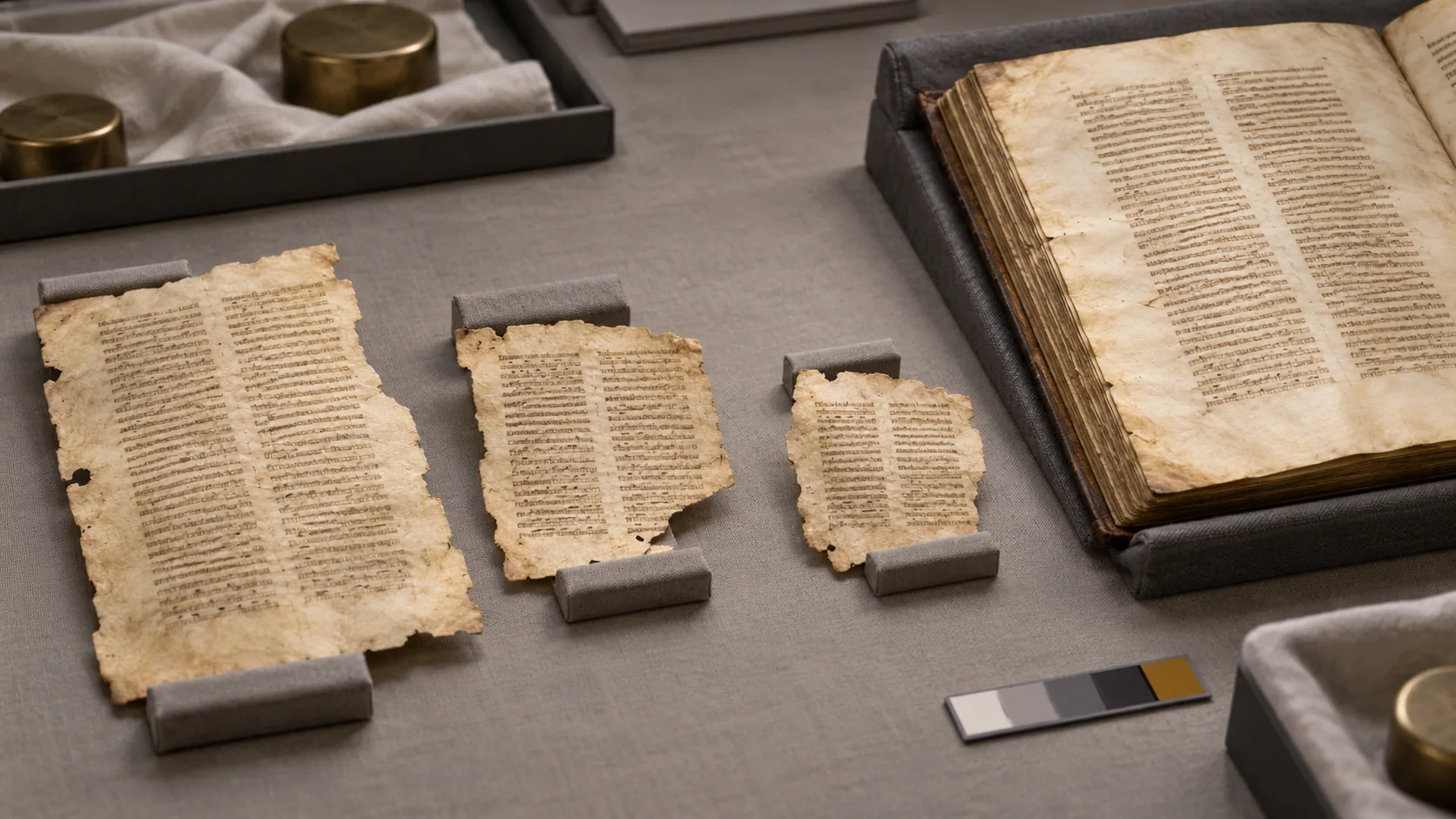
He brought three real leaves from Mount Athos and a copy of other leaves. The Greek text was published in Leipzig.
Scholars found serious problems. More original leaves were later found at Mount Athos and used to check what Simonides had copied.
The episode shows that Simonides could handle rare Greek manuscripts. It also gives a reason not to accept every statement or copy from him without testing it.
The Hermas connection is important context. By itself, it does not prove Simonides made Codex Sinaiticus, and it does not make every question about him disappear.
Fourth edition, 1894
What it can show: A near-period scholarly summary of the Simonides affair and the Shepherd of Hermas connection.
Its limit: Scrivener rejects Simonides’ authorship; this is a reasoned judgment, not a modern scientific test.
Open the source2019 paper
What it can show: Pinto’s detailed reply to objections, including his reading of Simonides and the Shepherd of Hermas dispute.
Its limit: It is advocacy for the modern Simonides case; each historical step still needs its underlying source.
Open the sourceWeigh the record
Start with what is documented. Then compare the claim, the support, the challenges and what remains open.
Showing every evidence card.
The main holdings are 347 leaves in London and 43 leaves in Leipzig, with leaves or fragments in St. Petersburg and at St. Catherine’s Monastery.
Tischendorf signed a receipt. It called the codex monastery property and promised return when requested, while other letters spoke about a possible future gift.
The formal acts of donation were signed in 1869, after a difficult church leadership dispute.
In 1862 Simonides claimed that he wrote it in 1839–40 at St. Panteleemon on Mount Athos under the direction of his uncle Benedict.
He handled real manuscript leaves and supplied a Greek text of the Shepherd of Hermas. Daniels and Pinto argue this makes his Sinaiticus story harder to dismiss without examination.
Daniels and collaborators point to a lighter-looking Leipzig group and darker-looking London leaves and ask whether the larger group was treated later.
The project photographed pages in four places using colour profiles, controlled lighting and a compromise background. McGrane argues that the Leipzig images are over-bright. Screen colour alone does not prove later staining.
Scholars challenged other material sold or copied by Simonides. His Hermas work shows both real skill and a reason to test his statements carefully.
Palaeography, scribal practice, corrections and the text’s history are part of the standard fourth-century dating. The modern forgery case must explain the whole object, not one photograph.
A clearly documented programme of non-destructive material analysis, open data and independent review could answer some physical questions. It would not, by itself, settle every question about ownership or motive.
A careful conclusion
The travels, the loan and the late donation papers are documented. Simonides really made his claim. Daniels and Pinto raise detailed questions. The standard fourth-century dating also rests on a much wider manuscript case than leaf colour alone.
A fair investigation should neither laugh away the claim nor turn a suspicious detail into proof. It should name the source, show its limit and ask what evidence could decide the point.
Open the records
International project, 2005–2011
What it can show: The main chronology, present holdings, the 1859 receipt, the 1862 edition and the 1869 donation records.
Its limit: The project says the modern history is complex and that some intentions in 1859 remain disputed.
Open the sourceInternational project
What it can show: Where the surviving leaves and fragments are held and the project’s aim to publish an objective record.
Its limit: It is a summary, not every underlying document.
Open the sourceProject technical record
What it can show: Four venues used common standards, colour profiling and fixed lighting; a light-brown background was chosen as a compromise.
Its limit: A carefully made digital image is still not the physical parchment, and a viewer’s screen adds another variable.
Open the sourceEnglish edition, 1866
What it can show: What Tischendorf publicly said about his visits and discovery.
Its limit: It is Tischendorf’s own later story and must be checked against receipts, letters and other witnesses.
Open the sourceRecords from 1859–1869
What it can show: Russian letters and the provisional agreement linking a loan, a hoped-for donation and church politics.
Its limit: The site presents the Russian archive’s reading of the agreement; the international project notes conflicting perspectives.
Open the sourceSeptember/October 1862
What it can show: Simonides said he wrote the codex at St. Panteleemon on Mount Athos in 1839–40 and explained how he believed it reached Sinai.
Its limit: The letter proves that he made the claim. It does not prove that the claim was true.
Open the sourceFourth edition, 1894
What it can show: A near-period scholarly summary of the Simonides affair and the Shepherd of Hermas connection.
Its limit: Scrivener rejects Simonides’ authorship; this is a reasoned judgment, not a modern scientific test.
Open the sourceModern research site
What it can show: The modern case that colour, ink, condition and the Simonides record deserve renewed scrutiny.
Its limit: The site argues for a conclusion. Its image comparisons must be weighed with the digitisation and colour-calibration cautions.
Open the source2019 paper
What it can show: Pinto’s detailed reply to objections, including his reading of Simonides and the Shepherd of Hermas dispute.
Its limit: It is advocacy for the modern Simonides case; each historical step still needs its underlying source.
Open the source2018 review
What it can show: A detailed challenge to the modern forgery case, including an argument that the Leipzig web images appear washed out.
Its limit: It is also a polemical review; its measurements and conclusions should be checked rather than merely accepted.
Open the source